Introduction
Recognizing a toxic relationship can be difficult when emotions and habits are already entangled. People often rationalize harmful patterns or confuse intensity with passion. Knowing the warning signs helps you evaluate whether a relationship is supporting your well‑being or undermining it.
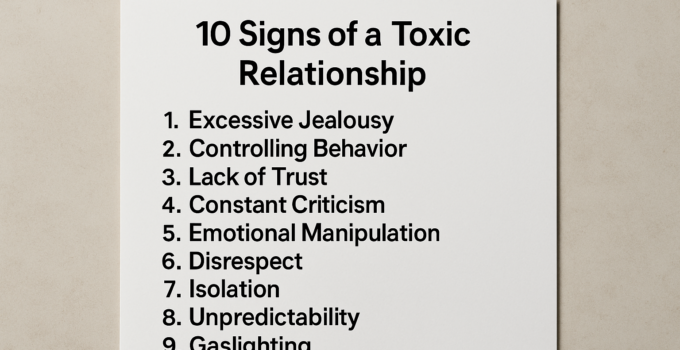
This article outlines ten common signs of a toxic relationship, explains how they typically show up, and offers practical steps to respond. Use this as a guide to reflect on your situation and make choices that protect your mental and emotional health.
1. Constant criticism and belittling
Frequent put‑downs, mocking, or persistent negative remarks about your abilities, appearance, or choices erode self‑esteem over time. Even when wrapped in “jokes,” repeated criticism creates a pattern where you begin to doubt yourself or change who you are to avoid disapproval.
What to do: Notice whether criticism is constructive or meant to control. Set boundaries by saying how certain comments make you feel and ask for respectful communication. If criticism continues, limit exposure and evaluate whether the relationship is emotionally safe.
2. Controlling behavior
Control can appear as dictating how you spend time, whom you see, or making decisions for you without consent. It may be justified as concern or protection, but the core issue is loss of autonomy. Control often escalates from subtle manipulation to overt demands.
What to do: Assert your right to personal choices and maintain separate friendships and activities. Create clear limits around private finances, schedules, and social life. If control persists despite boundaries, consider outside support to plan next steps.
3. Isolation from friends and family
A partner who discourages or sabotages relationships with loved ones is isolating you. This might be framed as wanting more time together or dislike of certain people, but the effect is cutting off your support network, which increases dependence on the partner.
What to do: Keep regular contact with those who care about you and be transparent about attempts to isolate you. If your partner becomes angry about your connections, that’s a red flag—prioritize relationships that provide perspective and safety.
4. Constant blame and refusal to take responsibility
In toxic dynamics, one person rarely owns mistakes. Instead, blame shifts to the other person, minimizing the wrongdoer’s accountability. This undermines conflict resolution and keeps you feeling guilty or defensive.
What to do: Call out patterns calmly and request mutual problem‑solving. When apologies are absent or insincere and behaviors don’t change, recognize that accountability is essential for a healthy partnership.
5. Emotional manipulation and gaslighting
Gaslighting is when someone denies your experiences or twists facts to make you question your memory, perception, or sanity. Emotional manipulation uses guilt, obligation, or selective kindness to get control. Both tactics make it hard to trust your own judgment.
What to do: Keep records of incidents if needed, trust trusted friends’ observations, and remind yourself that your feelings are valid. If manipulation is persistent, seek counseling or help from supportive people to re‑establish your reality and self‑trust.
6. Excessive jealousy and possessiveness
Jealousy becomes toxic when it triggers surveillance, accusations, or demands for proof of loyalty. Possessiveness restricts freedom and often stems from insecurity, but it becomes abusive when it justifies invasive behavior.
What to do: Communicate about boundaries and mutual expectations. Refuse to be monitored or controlled under the guise of love. If jealousy leads to intimidation or stalking behaviors, consider safety planning and professional help.
7. Patterns of disrespect and contempt
Disrespect can be overt—like insults—or subtle, such as dismissive body language, eye‑rolling, or undermining you in front of others. Contempt corrodes the relationship more quickly than many conflicts because it signals a lack of regard for your worth.
What to do: Set standards for respectful interaction and call out contemptuous behavior when it happens. If the other person responds with denial or escalates, that pattern signals deeper incompatibility or unwillingness to change.
8. Unequal emotional effort
Healthy relationships involve reciprocal care, listening, and compromise. A toxic relationship often features one partner consistently giving while the other takes without empathy—emotionally draining the giver and leaving important needs unmet.
What to do: Identify specific needs that are going unaddressed and communicate them clearly. Monitor whether efforts to rebalance receive a genuine, sustained response. If emotional labor remains one‑sided, reassess whether the relationship can be fair long term.
9. Frequent intense fights that go unresolved
Arguments are normal, but when conflicts are chronic, explosive, or never lead to resolution, they create ongoing stress. Repeated cycles of breaking up and reconciling or ignoring issues can indicate deeper incompatibility or avoidance of responsibility.
What to do: Try structured conflict resolution: calm timing, “I” statements, and specific problem‑solving steps. If fights always escalate or stay unresolved, consider relationship therapy if both partners are willing; if not, protect your emotional stability by reducing engagement with recurrent toxicity.
10. Physical, sexual, or financial abuse
Toxicity includes any form of abuse—physical harm, coercion into sexual activity, or controlling access to money. These behaviors are dangerous and merit immediate attention. Abuse is never justified and is distinct from relationship conflict.
What to do: Prioritize safety. Reach out to trusted people, professional services, or emergency resources appropriate to your situation. Create a safety plan for leaving if needed and secure important documents and finances when possible.
When to seek external help
Some toxic patterns can be addressed through honest communication or couples counseling if both partners are committed to change. However, when behaviors involve abuse, manipulation, or persistent refusal to change, external help becomes critical. Confidential counseling, trusted friends or family, and professional support services can provide guidance and safety planning.
If you’re unsure about the severity of your situation, talking with a mental health professional or a support organization can clarify options and connect you with resources tailored to your needs.
10 Signs Someone Likes You offers a practical companion perspective that helps readers interpret subtle signals in social dynamics, complementing the critical awareness from the current topic.
Conclusion
Recognizing signs of a toxic relationship is the first step toward protecting your well‑being. Look for patterns, not isolated incidents, and trust your sense of safety and self‑worth. Set clear boundaries, seek support, and remember that leaving a toxic relationship is a valid and often necessary choice for preserving mental and emotional health.